A tutoring centre on the North Shore had been listed on Google Maps for over a year. They were invisible for every keyword that mattered. Within 19 days of working through a structured local SEO process, they were ranking number one in their suburb across 10 different local keywords.
That result gets raised every time I’m asked how long local SEO takes. The honest answer is: it depends on variables most agencies won’t explain to you. This article breaks those variables down and gives you a realistic picture of what to expect and when.
Why “3–6 Months” Is Technically Correct but Practically Useless
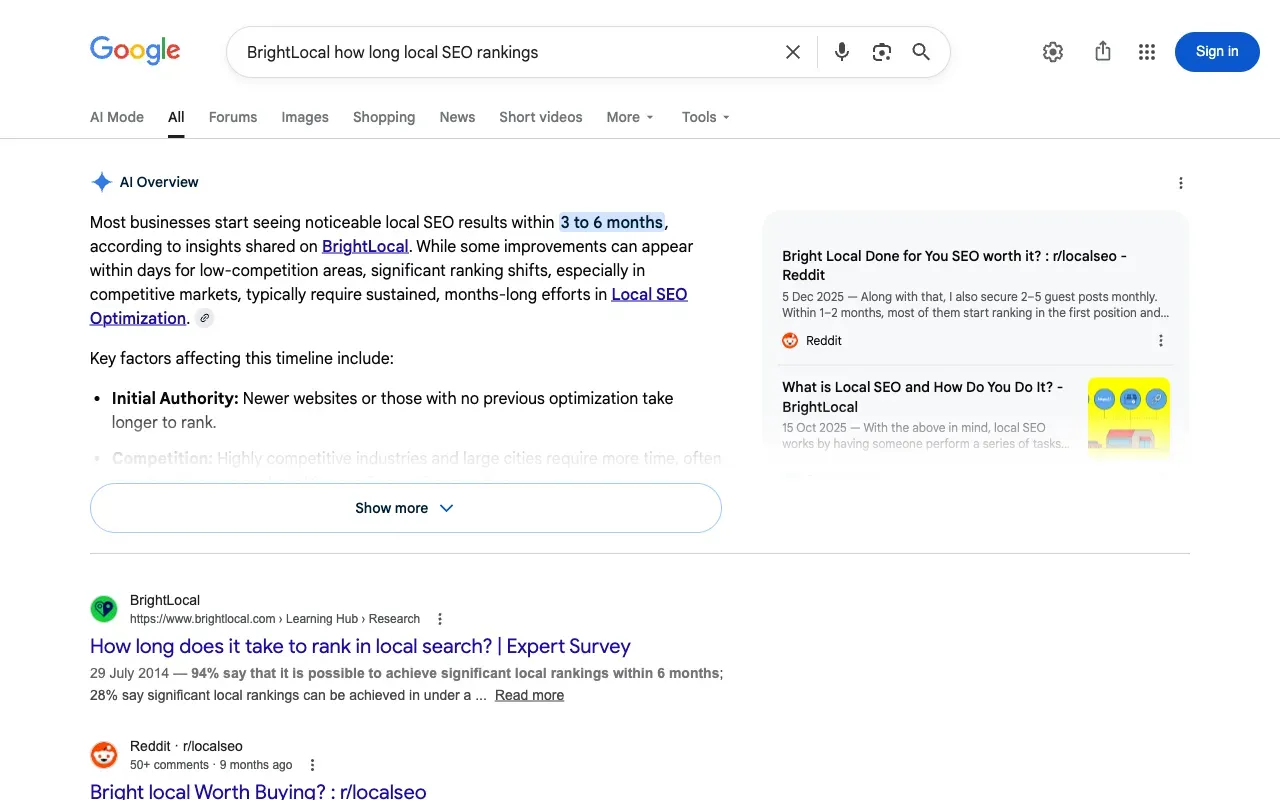
Every local SEO agency will tell you to expect results in three to six months. That range is accurate enough to be defensible and vague enough to be meaningless.
A tradie in a regional NSW town competing against two other local businesses is not in the same situation as a dentist trying to rank in Sydney’s Inner West against fifty established practices. Giving them the same timeline is like telling both of them a renovation will cost “somewhere between $10,000 and $200,000.”
The range exists because local SEO timelines genuinely vary. But the variables that determine where you land in that range are knowable. Understanding them lets you set a realistic expectation for your specific situation rather than waiting six months to find out you were the outlier.
How Long Does the Google Maps Pack Take Compared to Organic Rankings?
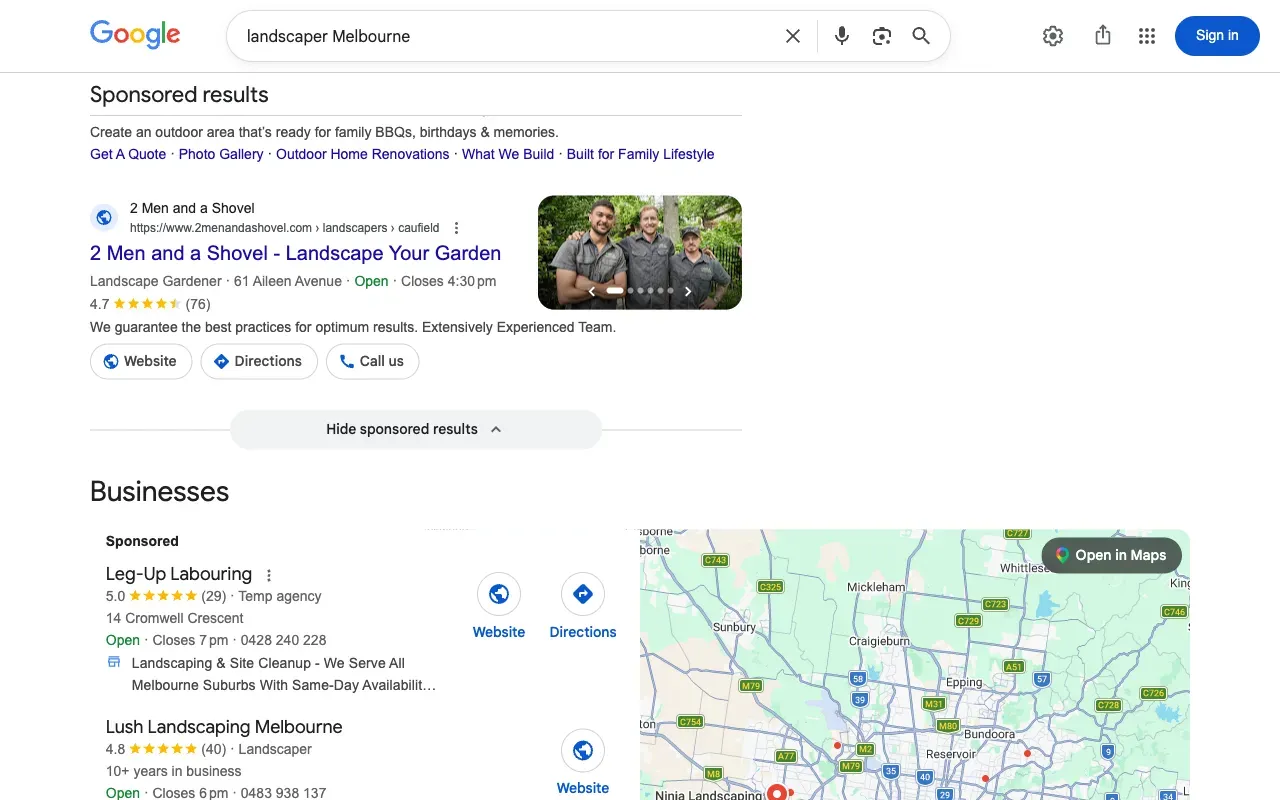
The Google Maps pack and organic search rankings move on different timescales. Most Australian small businesses asking about local SEO are really asking about one thing: the Maps pack. Those three business listings that appear at the top of local search results, with the map, the star ratings, and the call buttons.
The map pack and organic search rankings move on different timescales.
Map pack rankings are driven primarily by your Google Business Profile (GBP), your reviews, and your citation consistency. These are things you can act on immediately, and Google can reflect changes relatively quickly. In low-to-medium competition markets, meaningful movement in the map pack can happen within four to eight weeks.
Organic rankings, the standard blue links below the map pack, are driven primarily by your website’s authority, content, and backlinks. These signals accumulate slowly. Expect six months minimum for meaningful organic movement, often twelve months or more in competitive markets.
If your goal is more calls from Google, the map pack is where to focus. That’s where most local intent searches end: the user sees the map, picks one of the top three, and calls. The organic listings below it capture a much smaller share of that traffic.
What Happens Month by Month with Local SEO?
Weeks 1–4: Foundation work, no visible ranking changes
This is where the items in a local SEO checklist get completed: GBP optimisation, NAP consistency, citation cleanup, category selection, photo uploads. None of this is immediately visible in rankings. Google is indexing the changes and beginning to re-evaluate your profile against competitors.
You may see small fluctuations in where you appear, but nothing meaningful yet. This is normal.
Months 2–3: Early movement begins
If your GBP is now fully optimised and your review count is growing, Google will typically begin reflecting those changes in your map pack position. Businesses in low-competition markets, regional areas, or niche categories often see significant movement here.
In Sydney or Melbourne for competitive categories (dentists, lawyers, plumbers, real estate agents), you will likely still be outside the top three at this point. You should, however, be able to see your GBP appearing for a wider range of keyword variations than before.
Months 4–6: Compounding signals
By this stage, reviews have been accumulating, citations are consistent, and Google has had time to process everything. For most small businesses in mid-competition markets, this is when meaningful map pack rankings appear.
Your website’s local signals are also starting to show effect at this point, particularly if you have added localised content or had other local sites link to you.
6 Months and Beyond: Competitive categories and organic rankings
Highly competitive categories in major cities require sustained effort past the six-month mark. This is not a sign that local SEO isn’t working. It is a reflection of how many established competitors Google has to evaluate you against.
Organic rankings also become relevant here. If your website has been building authority through consistent content and local links, you may start appearing in the blue link results below the map pack for your primary keywords.
What Variables Determine How Fast Your Local SEO Works?
Competition level is the biggest factor. A plumber in Bathurst is competing against a handful of businesses. A plumber in Parramatta is competing against dozens of established operators, many of whom have been actively investing in local SEO for years. The Bathurst plumber might see map pack results in four weeks. The Parramatta plumber might need five months.
Your starting point matters significantly. A business with a claimed, partially optimised GBP and 15 existing reviews is ahead of a business starting from scratch. A business with NAP inconsistencies across 40 directories has a cleanup task that delays everything else.
Review velocity has an outsized impact on timeline. Businesses that implement a consistent review-asking process alongside their local SEO work almost always see faster results than those that treat reviews as a separate task to address later.
Website age and authority affects the organic timeline more than the map pack timeline. An older domain with some existing backlinks will move faster in organic search than a brand new website, regardless of how well it is optimised.
Category competitiveness varies enormously within the same city. A cosmetic dentist and a general dentist in the same suburb are in different competitive environments. A personal injury lawyer and a commercial leasing lawyer face entirely different SERPs.
How to Tell It’s Working Before You Rank
Ranking position is a lagging indicator. There are earlier signals that show local SEO is having an effect, even when your position hasn’t changed yet.
Check your GBP Insights monthly. Track: how many searches your profile appeared in, how many people requested directions, and how many clicked to call. These numbers should increase consistently in the first two to three months of active local SEO work, often before your visible ranking improves. For rank tracking beyond GBP Insights, tools like BrightLocal or Whitespark’s Local Rank Tracker show your position across specific local keywords over time.
Also track your profile’s appearance for new search terms. Your GBP Insights will show you the search queries that triggered your profile. As your optimisation takes effect, you’ll start appearing for keyword variations you weren’t visible for before. This is an early sign the process is working.
How Does Local SEO Compare to Google Ads on Timeline?
Google Ads generates clicks the day you turn it on. Local SEO takes months before results compound. That trade-off is real and worth naming directly.
The honest trade-off: if you need calls next week, Google Ads is the right tool. If you want a sustainable source of inbound enquiries that doesn’t cost you money every time someone clicks, local SEO is the better long-term investment. Most businesses I work with use both: Ads to generate leads while local SEO builds, then reduce Ads spend as organic and map pack traffic grows.
The other meaningful difference is cost over time. Google Ads spend stops producing results the moment you stop paying. Local SEO rankings, once established, continue to generate calls with only maintenance effort. The upfront time investment pays compounding returns.
What Mistakes Reset Your Local SEO Timeline?
Changing your business name or address on your GBP triggers a re-verification process and can set your rankings back significantly. Make these changes only when necessary, and update every citation and directory listing immediately when you do.
Inconsistent NAP across directories doesn’t just slow your progress. It actively creates a negative signal. Google’s confidence in your business location decreases when your details appear differently across platforms.
Stopping review requests after an initial burst is one of the most common timeline-extenders I see. Review velocity matters. A steady flow of new reviews over time signals an active business far more than 30 reviews accumulated in one month and nothing since.
Changing your primary GBP category to test different options is another one to avoid. Category selection is a strong ranking signal and Google needs time to process and reflect each change. Pick the right category once and leave it.
Common Questions
Is local SEO worth it for a small business in Australia?
For most Australian small businesses that rely on local customers, yes. The Australian local search market is generally less competitive than the US or UK, which means achievable results for businesses that would struggle to rank in comparable US markets. The ROI depends on your average customer value and how often you close inbound enquiries, but for most trades, professional services, and retail businesses, one or two extra customers per month from local SEO covers the cost of doing it properly.
Is local SEO still effective with AI search?
Google’s AI Overviews and tools like ChatGPT are changing how some searches are answered, but local intent searches (“plumber near me,” “dentist in Bondi”) continue to surface the map pack prominently. AI tools also pull from structured local business data, including your GBP, to answer local queries. Maintaining a complete, optimised GBP is arguably more important now than before AI features became prominent.
How often do I need to update my local SEO?
The foundation work is a one-time setup. Ongoing maintenance includes: adding photos monthly, publishing Google Posts monthly, continuing to ask for reviews, and updating your GBP whenever your hours, services, or address change. The review-building process should be continuous, not a campaign you run once.
My rankings dropped suddenly. What happened?
Common causes: a competitor significantly increased their review count, Google updated its local ranking algorithm, your GBP details were changed (sometimes by Google or by users flagging information), or a citation inconsistency was introduced. Check your GBP for any unauthorised edits first, then compare your review count against the businesses now ranking above you.
The 19-day result from the North Shore tutoring centre was real, and it was achievable because the competitive environment was right and the work was done comprehensively and quickly. Most businesses will take longer. That doesn’t mean the process isn’t working.
If you want someone to assess your specific situation, a local SEO consultant can give you a realistic timeline based on your category, location, and what your competitors are actually doing. A 30-minute call is usually enough to give you a clear picture.
If you’re wondering what all of this costs, the next article covers how much local SEO costs in Australia.
Jay Ong is a Local SEO Consultant based in Sydney, helping Australian small businesses rank higher on Google Maps and attract more local customers.