A mobile paint touch-up business I work with had been running Google Ads for two years. Solid lead volume, reasonable cost-per-click, the phone was ringing. Then they paused the ads during a quiet period to cut costs. The calls stopped the same day. Not slowed down. Stopped.
They had no Google Maps presence worth mentioning. No organic rankings. Two years of ad spend had generated zero lasting digital asset. The moment the budget paused, they became invisible.
That situation is more common than most business owners realise, and it shapes how I think about this question every time a client asks it.
What Does Local SEO Do vs Google Ads?
Google Ads places your business at the top of search results immediately, on a pay-per-click basis. You set a budget, choose your keywords, and your ad appears when someone searches for them. The moment you stop paying, you stop appearing.
Local SEO earns your position in Google’s map pack and organic search results through optimisation work: your Google Business Profile, reviews, citations, on-site signals, content, and links. It takes months to build. Once established, it generates leads without a cost-per-click.
These are not competing strategies. They operate on different timelines and serve different functions. The question isn’t which one is better in the abstract. The question is which one your business needs right now, and in what order.
Why Should You Prioritise Local SEO Over Google Ads?
Local SEO builds an asset. Every review you earn, every citation you clean up, every piece of local content you publish compounds. A business that ranks in the map pack and in organic results for its primary keywords generates leads at no incremental cost per click. That position, once established, is defensible.
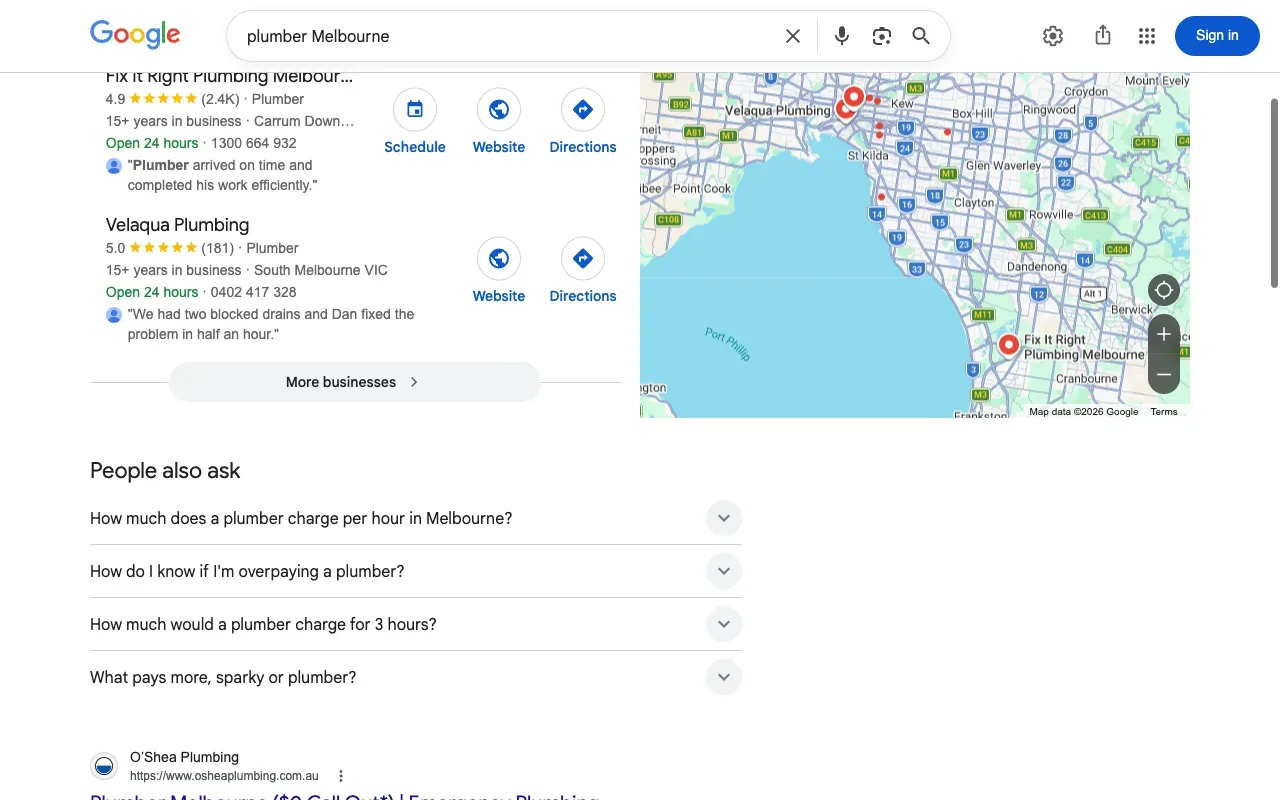
The map pack and organic results together cover the full surface of local search. How much each contributes to your leads depends on your industry. For some categories, the map pack drives 70–80% of local search enquiries. For others, particularly professional services, health, and home improvement, the map pack accounts for as little as 25% of clicks, with the other 75% going to organic blue-link results. Knowing your industry’s split matters: if your category sends most searchers to organic results, map pack optimisation alone leaves the majority of your potential traffic untouched.
The other advantage of local SEO is survivability. When a business hits a slow month and needs to cut costs, organic rankings don’t disappear overnight. The mobile paint-up business didn’t have that floor. When the budget paused, so did everything.
When Does Google Ads Make Sense for a Local Business?
Google Ads is not the wrong tool. It is the wrong foundation.
A new business with no reviews, no established GBP, and no domain authority needs leads before local SEO can generate them. Ads fill that gap while the organic foundation is being built.
A seasonal business with specific high-value windows (end-of-financial-year, pre-Christmas, pre-summer) can use Ads to maximise visibility during those periods without carrying a year-round cost.
Testing a new service or market is faster with Ads. If you’re expanding into a new suburb or adding a new service line, Ads let you validate demand before investing months in local SEO for that specific keyword.
Highly competitive categories in major cities where local SEO alone would take 12+ months to produce meaningful results benefit from Ads as a bridge. You’re not choosing one or the other — you’re sequencing them.
How Does Your Industry Affect the Local SEO vs Google Ads Decision?
The right balance between local SEO and Google Ads depends heavily on your category and how your customers search.
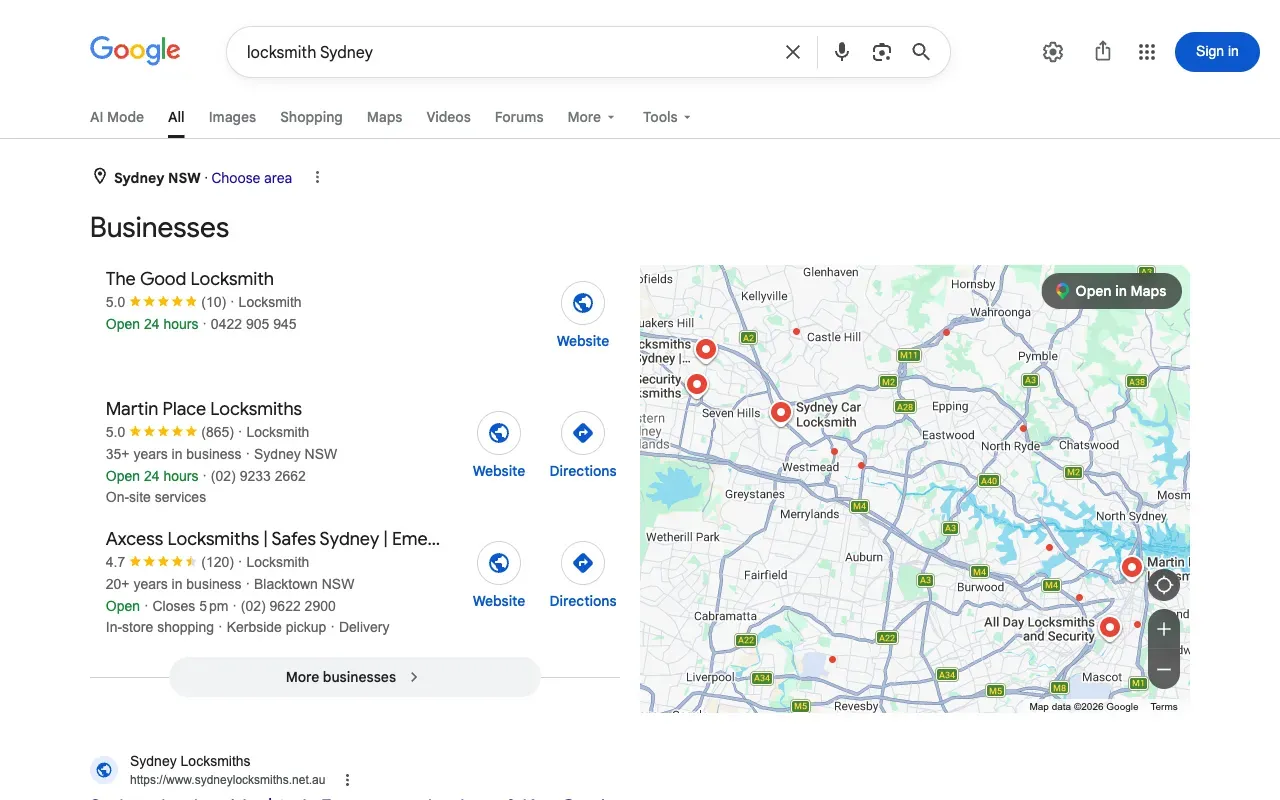
For emergency and transactional services (locksmiths, towing, emergency plumbers), searchers often click the first available result and call immediately. The map pack captures a very high share of these clicks. Local SEO is the priority.
For considered purchases and professional services (lawyers, accountants, dentists, financial advisers), searchers read multiple results, compare options, and visit websites before enquiring. Organic rankings drive a larger share of leads. You need both the map pack and strong organic rankings, and Ads can supplement while SEO builds.
For niche or high-competition services where Google Ads cost-per-click is significant (personal injury law, mortgage broking, premium home renovation), the economics of paying $20–$50+ per click indefinitely make the case for SEO investment even stronger.
How Do You Sequence Local SEO and Google Ads?
The most effective approach for most Australian small businesses is to use Ads as a bridge, not a foundation.
Phase 1 (months 1–3): Run Ads to generate immediate leads while completing the local SEO foundation work: GBP optimisation, citation cleanup, review building, on-site local signals. You’re paying for leads while building the asset that will eventually replace the spend.
Phase 2 (months 3–6): As map pack rankings start to materialise, monitor which keywords are now generating organic leads. Begin reducing Ads spend on those keywords while maintaining Ads for keywords where you haven’t yet ranked.
Phase 3 (6 months+): For established rankings, Ads become optional or targeted rather than core. You’re using them to fill specific gaps, test new offers, or maintain visibility during competitive periods, not to sustain basic lead volume.
This is how working with a local SEO consultant typically looks in practice: not replacing Ads on day one, but building toward the point where the business isn’t entirely dependent on them.
Which Should You Choose If You Can Only Afford One?
The honest answer: start with local SEO if you have any existing lead flow, and use Ads if you have none.
A business with existing customers, referrals, or word-of-mouth can afford the 2–4 month ramp time for local SEO to begin producing results. The investment builds an asset that pays compounding returns.
A brand new business with no customers and no pipeline needs calls now. Ads deliver that. But set a date at which you review whether local SEO investment has started, because running Ads indefinitely with no organic foundation is the situation the mobile paint-up business was in.
The worst outcome is two years of ad spend with nothing to show for it the moment the budget pauses.
Common Questions
How much does Google Ads cost for a local Australian business?
Cost-per-click varies significantly by category. Service businesses in less competitive regional markets might pay $2–$8 per click. Trades in Sydney or Melbourne can pay $10–$25. Professional services (lawyers, financial advisers) in competitive categories can exceed $40 per click. Monthly ad spend for a meaningful volume of clicks typically starts at $500–$1,500 for a local service business and scales up in competitive markets.
Can local SEO replace Google Ads completely?
For many businesses, yes, eventually. Once map pack and organic rankings are established for your primary keywords, the lead volume from organic search often matches or exceeds what Ads were producing, at no per-click cost. The caveat is that some highly competitive categories, or businesses that want to dominate beyond their organic reach, benefit from running both indefinitely.
Is it worth running Ads while waiting for SEO to kick in?
Usually yes, if the economics work. If your average customer value justifies the cost-per-click and you can afford to run Ads for 3–6 months while local SEO builds, it’s the right sequence. If the cost-per-click makes Ads unprofitable at your current conversion rate, it’s worth focusing on local SEO alone and managing cash flow through other means during the build period.
My agency runs both my Ads and my SEO. Is that a conflict of interest?
It can be. An agency billing you for both Ads management and SEO has less financial incentive to transition you away from Ads as your organic rankings improve. It’s worth reviewing whether your Ads spend is genuinely being reduced as your local SEO results compound, or whether both budgets are being maintained indefinitely. For more on evaluating SEO providers, see how much does local SEO cost in Australia.
The mobile paint-up business is now building its local SEO foundation alongside a reduced Ads budget. The goal is to reach a point where the map pack and organic results carry enough lead volume that Ads become a choice rather than a necessity.
That’s the position every local business should be working toward. If you want to map out what that transition looks like for your specific situation, book a call and I’ll give you a clear picture of where to start and what to expect.
For the next step in evaluating your options, the following article covers local SEO agency vs freelance consultant — what the differences are and which makes sense for your business.
Jay Ong is a Local SEO Consultant based in Sydney, helping Australian small businesses rank higher on Google Maps and attract more local customers.